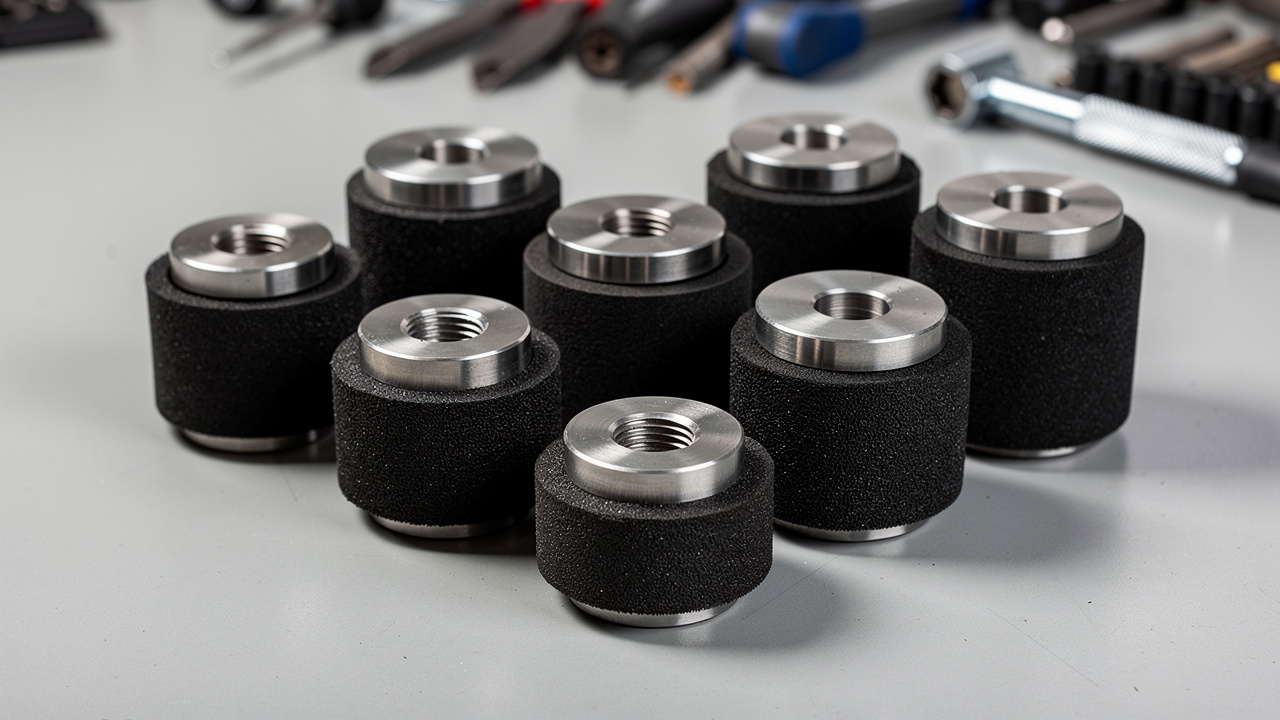
Rubber Bonded Parts
Bombay Rubber & Carbon Works
Rubber permanently joined to metal, fabric, plastic and PTFE, so two parts behave as one strong, reliable component.
At Bombay Rubber & Carbon Works, we bond rubber to a range of substrates under controlled conditions so the finished part resists vibration, pressure, heat and wear far better than an assembly held together with fasteners. A bonded part removes the weak joint between components, which means fewer leak paths, quicker assembly and longer service life.
Every part is made to your drawing or sample, with the rubber compound, hardness and substrate chosen for your working environment.
Our Bonded Product Range
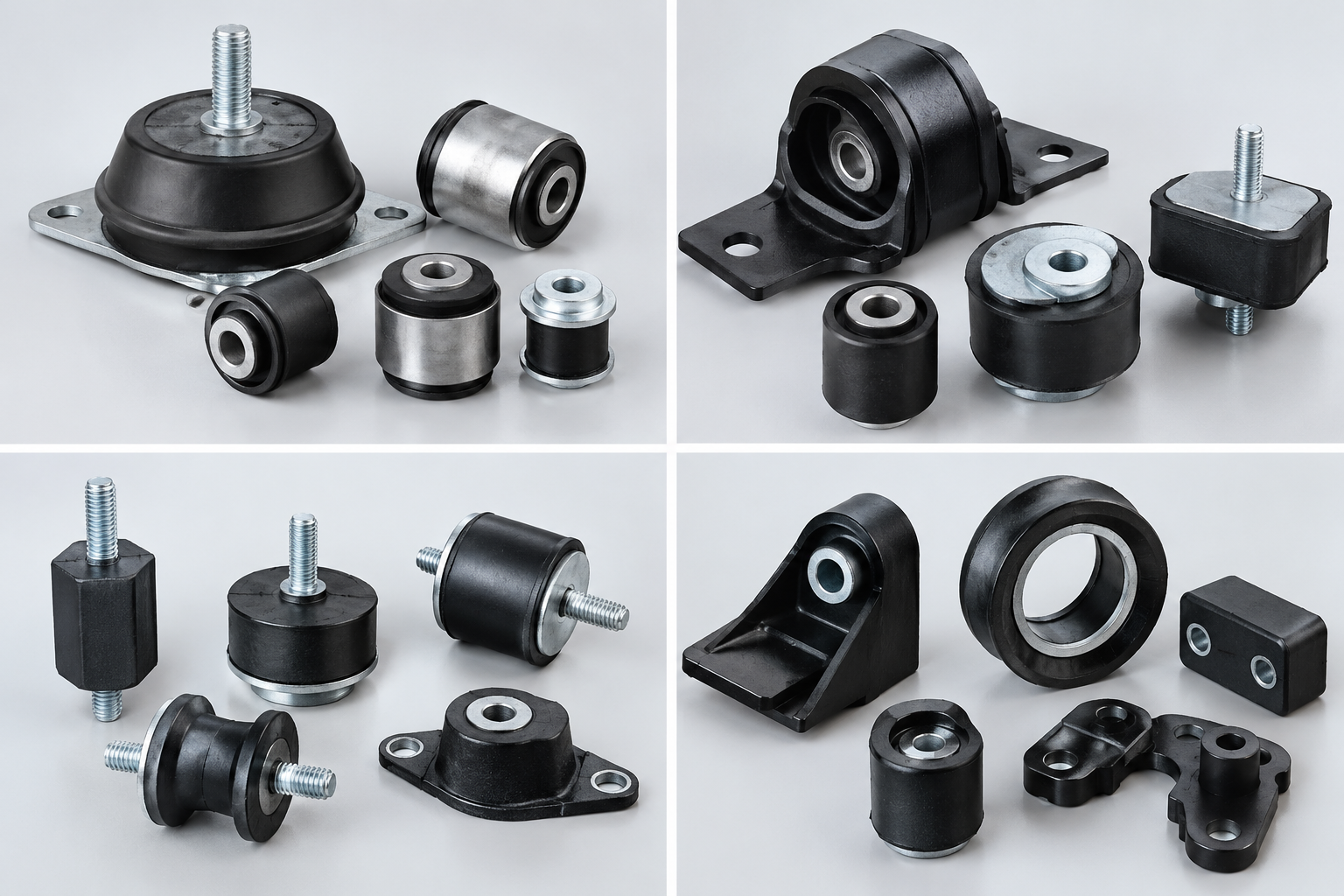
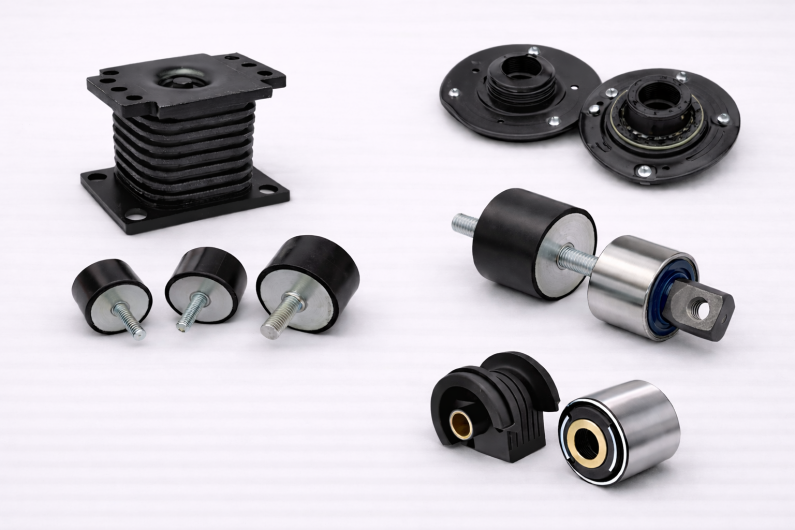
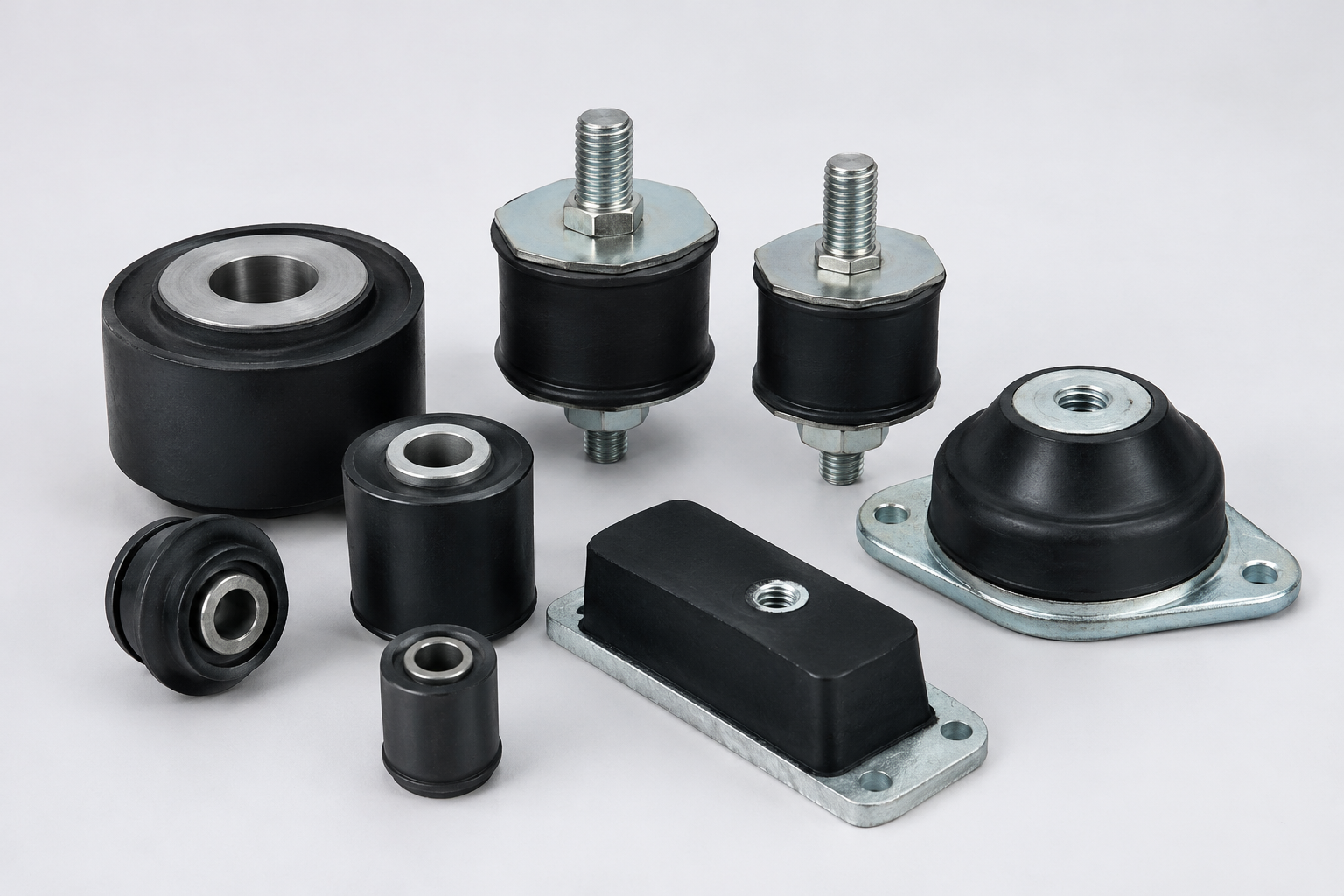
- Rubber-to-Metal Bonded Parts: Rubber moulded onto steel, aluminium or brass plates and sleeves. Used for mounts, bushes, bump stops and seals that must handle load and vibration.
- Fabric Bonded Parts: Rubber layered with woven fabric for added strength and flexibility. Suited to diaphragms, flexible membranes and pressure-bearing seals.
- Rubber-to-Plastic Bonded Parts: A rigid plastic body combined with a soft rubber sealing face, making complex shapes easier to produce without separate gaskets.
- PTFE Bonded Parts: PTFE is chemically inert and naturally non-stick, so it is hard to bond. With special surface treatment we join it to rubber for chemical-resistant seals.
- Adhesive Tape Rubber Bonding: Silicone and other rubber strips backed with adhesive tape for easy fitting on doors, panels and enclosures that need a clean, durable seal.
Key Benefits
- One solid component: no gaps between rubber and substrate where fluid or dust can creep in.
- Higher strength: metal or fabric reinforcement carries load while rubber absorbs shock.
- Vibration and noise control: rubber damps movement before it reaches the structure.
- Simpler assembly: fewer loose pieces, less fitting time, lower handling errors.
- Temperature and pressure resilience: compounds selected for the duty, such as NBR, EPDM, silicone, neoprene or FKM.
- Custom geometry: shapes, sizes and hardness made to your specification.
Where They Are Used
Pharmaceutical and food equipment, automotive and rail components, pumps and valves, industrial machinery, electrical enclosures, powder handling systems and chemical processing plants.
Frequently Asked Questions
What is a rubber-to-metal bonded part?
It is a single component where rubber is moulded directly onto a metal substrate, instead of two separate pieces joined mechanically.
Can rubber be bonded to plastic?
Yes. It is an efficient way to build complex shapes with a rigid body and a flexible sealing surface.
Is PTFE bonding possible?
Yes, though it needs special surface preparation because PTFE resists adhesion by nature.
Why choose fabric reinforcement?
It raises strength and pressure and temperature resistance while keeping the part flexible.
Can a bonded part replace my fastened assembly?
Often yes. Send us your drawing or sample and we will review feasibility.
Request a Quote
Share your drawing, sample or specification and our team will suggest the right compound and bonding method.