
Conductive Moulded & Extruded Rubber Parts
Static-dissipative and electrically conductive rubber components that protect people, products and electronics.
Conductive rubber is made by blending carbon or another conductive filler into an elastomer. The result keeps the flexibility and sealing ability of rubber while letting electrical charge move safely away. It can be die-cut into flat gaskets and washers, and, unlike many alternatives, it can also be extruded into a wide range of profiles.
Bombay Rubber & Carbon Works makes conductive moulded and extruded parts for electrical, pharmaceutical and powder-handling applications, including grades with flame-retardant and high-temperature properties.
Product Range
- Conductive Silicone Sheet: Die-cuttable sheet for gaskets and washers where static control and cost both matter.
- Conductive Silicone Tubing: Tubing that bleeds off static charge to cut fire and damage risk (Not food grade).
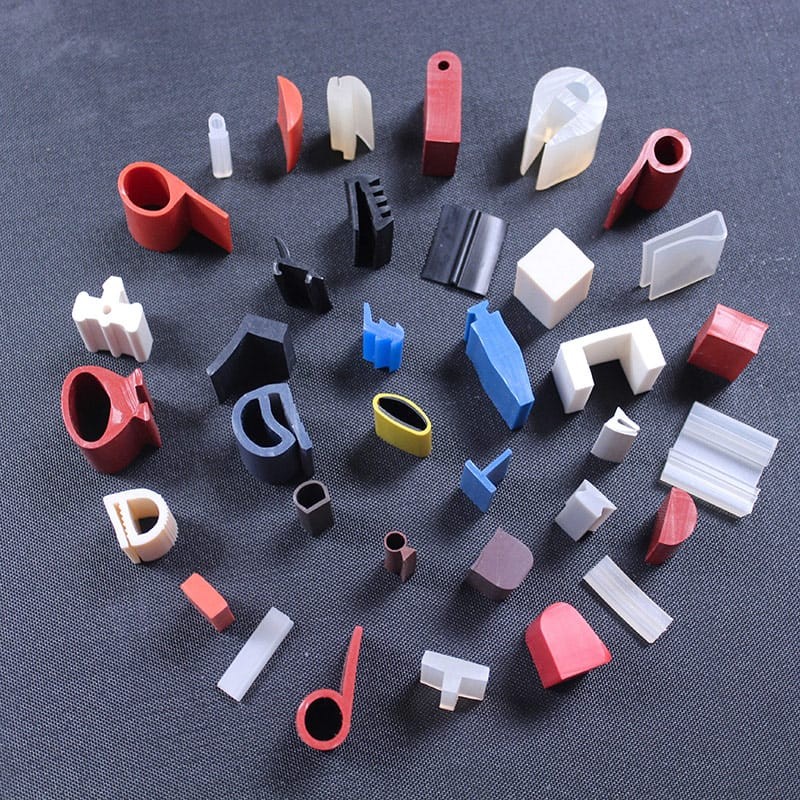
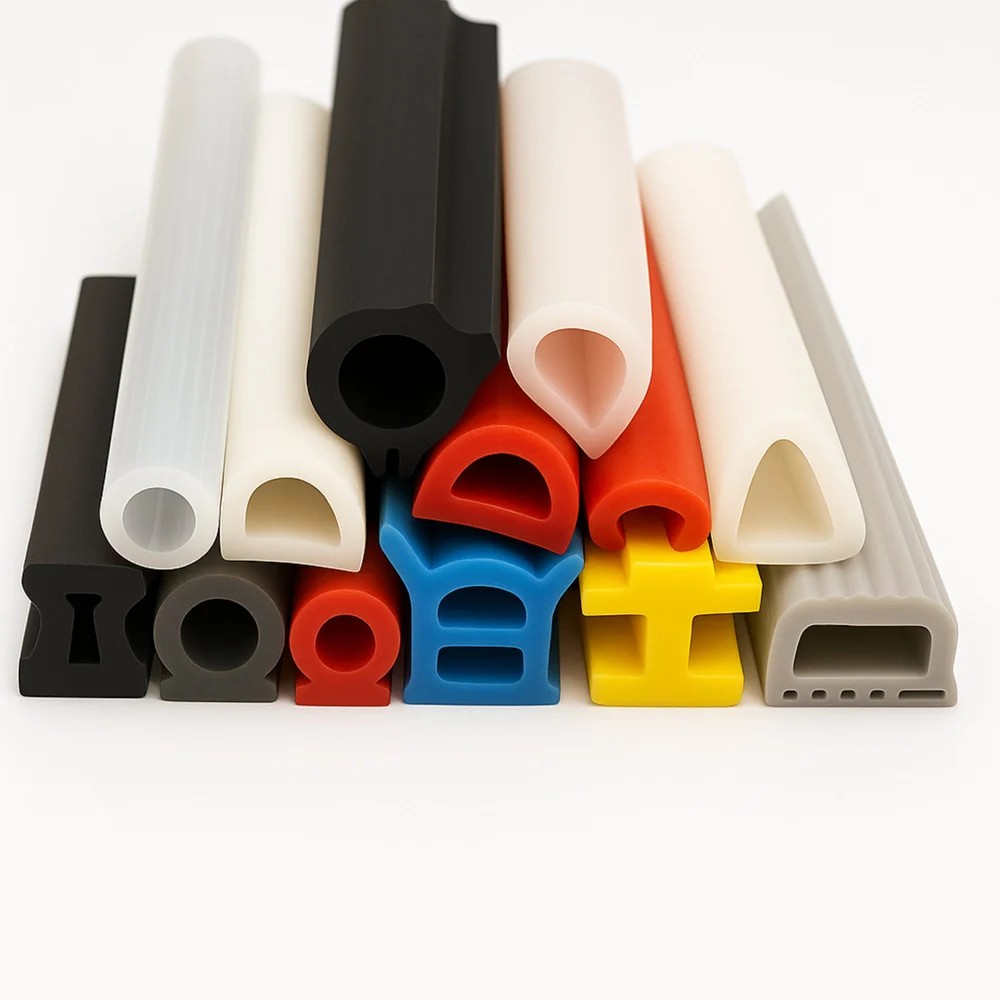
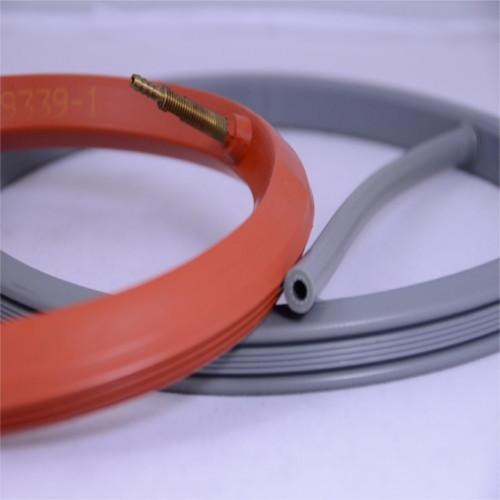
- Extruded Profiles: D, round, P, square, tube and rectangular sections, solid or hollow.
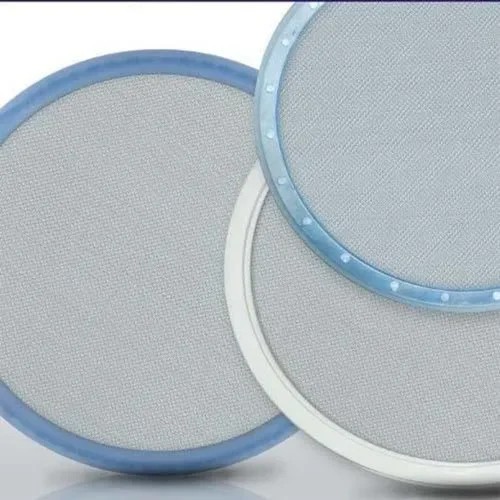
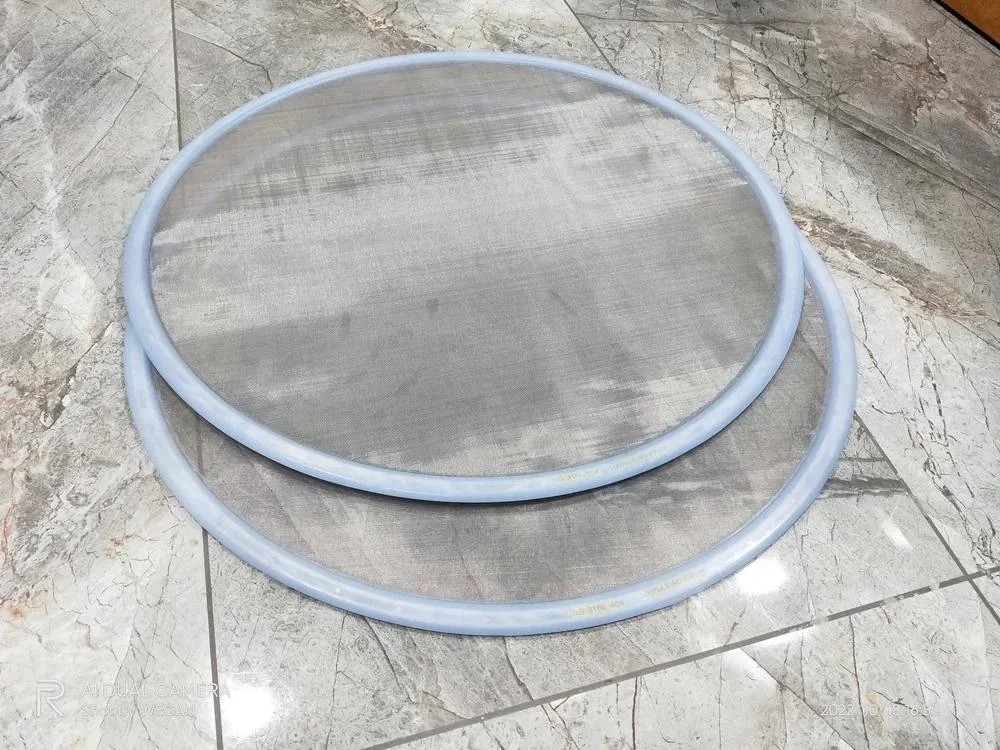
- Antistatic Sieve Gaskets: Seals around sifter and FBD sieves in powder transfer, dissipating static safely.
- Antistatic Bellows & Sleeves: Flexible bellows for sifters and powder handling, built to dissipate static.
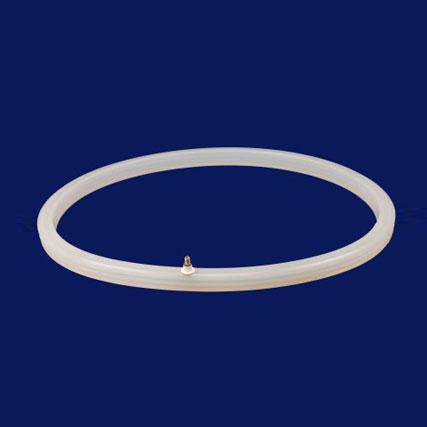
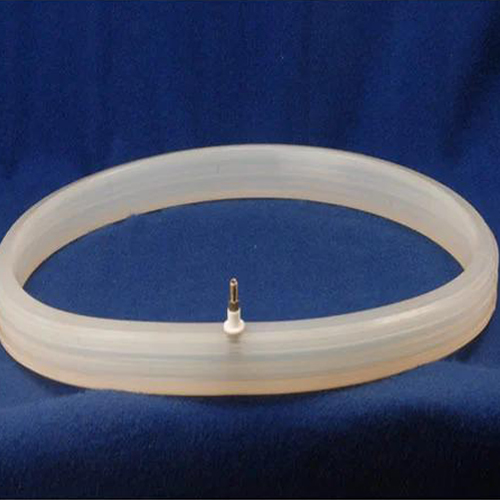
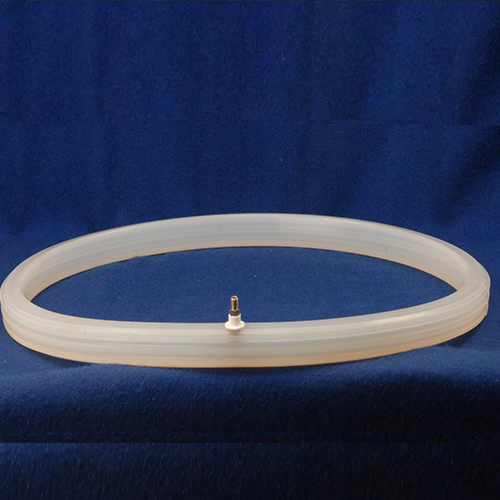
- Antistatic Inflatable Seals: Inflatable seals for fluid-bed dryer doors that reduce spark risk around solvents.
Key Benefits
- Static control: Helps prevent sparks where solvents or fine powders are present.
- Shielding: Suited to reducing radio-frequency and electromagnetic interference as part of an enclosure seal.
- Flame-retardant options: Available for demanding electrical and industrial settings.
- Heat tolerance: High-temperature grades for hot environments.
- Custom shapes: Moulded, die-cut or extruded to your drawing or sample.
Frequently Asked Questions
What makes rubber conductive?
A conductive filler such as carbon is mixed into the rubber, creating paths for electrical charge to travel through the material.
Which profiles can you extrude?
D, round, P, square, tube and rectangular, solid or hollow.
What is a static-dissipative silicone sieve used for?
It seals sieve equipment in powder transfer while safely draining static build-up that could spark or damage the product.
Can these parts handle high heat?
Yes, flame-retardant and high-temperature conductive grades are available.
Is conductive silicone food grade?
It depends on the compound. Conductive tubing is generally intended for industrial use and is not food grade, so confirm the grade you need when you enquire.
Applications
Pharmaceutical: Fluid-bed dryers, sifters, sieves and powder transfer equipment.
Electrical & Electronics: Enclosure seals and gaskets that need conductivity and shielding.
Industrial: Hazardous areas where solvents, dust or powders create ignition risk.